I met my friend Tom back in 2001 when we were both living in Vermont. In the 90’s he traded in his fast paced life in the Chicago business world for a life on a Vermont organic farm. His years of experience on this farm set the groundwork for the incredible mastery and vast knowledge of gardening that he has today. He has a very special connection and seeming interaction with his plants. Tom currently lives in Rochester, NY where he now focuses his attention on the lovely flower gardens at his home.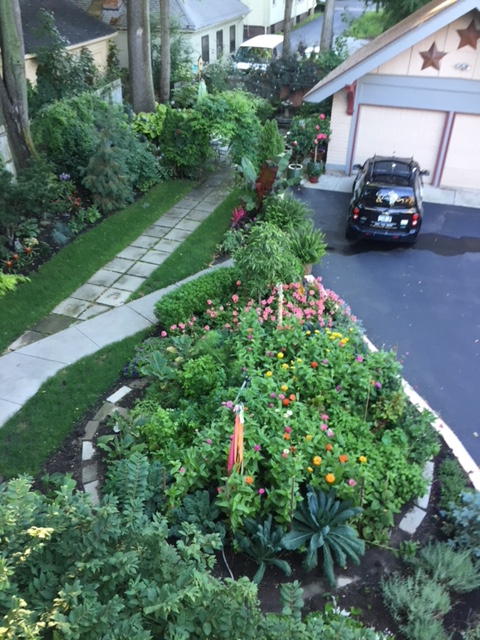
He started posting photos of a particular garden at various stages on facebook a few years ago. Of course, when I would see the photos I would “like” them, and always think how lovely his garden is. A year or two ago a post really caught my attention; it had to do with a maypole in that garden. I hadn’t heard the word maypole in years, and couldn’t even remember what it was to be honest. As I researched it online I found that there is a lot of tradition and history behind maypole festivities, and it varies from culture to culture. The maypole is often found at festivals, usually on or around May 1st. In a modern day nutshell, the maypole “dance” represents a time of fertility.
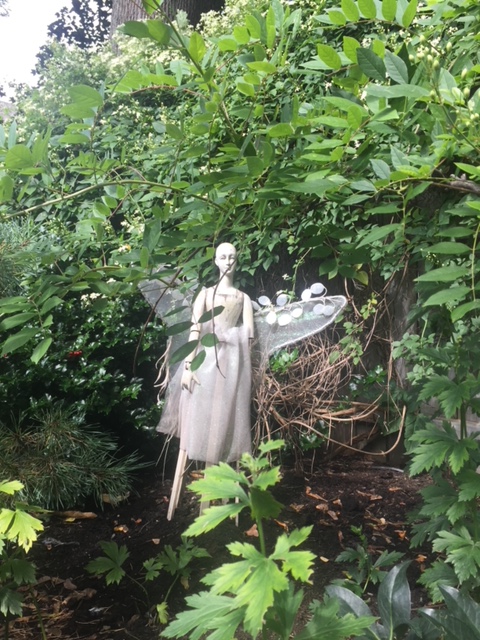
In my interview with Tom, I specifically asked him what the deal was with the maypole. He told me that it all started by his wanting to create a sacred garden, and by asking Nature. Using his connection with Nature he asked it direct questions to give him guidance on creating the garden… questions such as: where to plant, what size to make it, what’s the shape of it. From there he spent time intentionally “watching it’s evolution and then it’s growth”, and then listening and allowing Nature in this sacred garden space to “be your teacher, and ask how is it giving you guidance and instruction, and paralleling in your own life?” He says that sometimes the garden starts to get weedy and you have to start weeding things out; and he asks the question of how is that reflecting things in his own life.
He then makes reference to maypoles. He said, “I always have these maypoles from days gone by. And they have long entanglements that end up in the soil.” He talks about how he replaced his outdoor Christmas tree with the maypole, which he refers to a the community tree.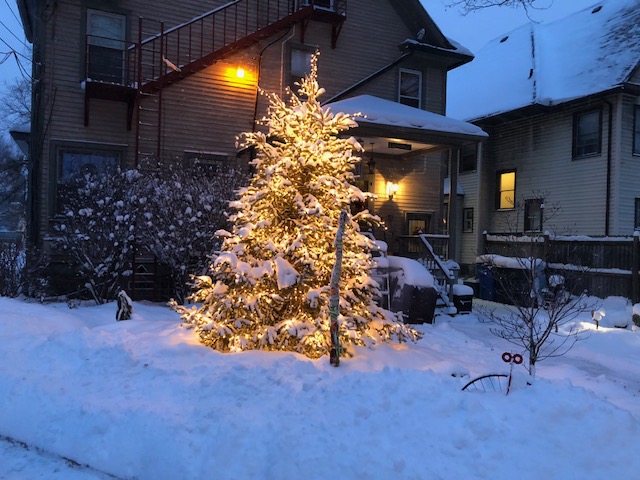
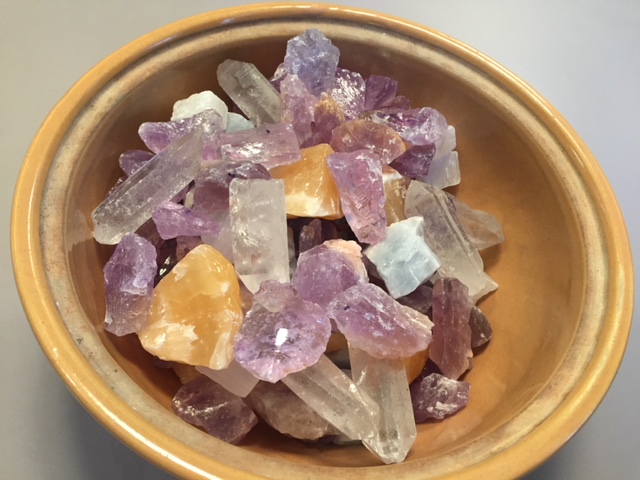
Every bough (balsam) of the tree represents some organization or person that he is connected with. He then wraps crystals with loving intentions on the boughs, which sit out through the winter months filled with intentions of the inspiration of hope.
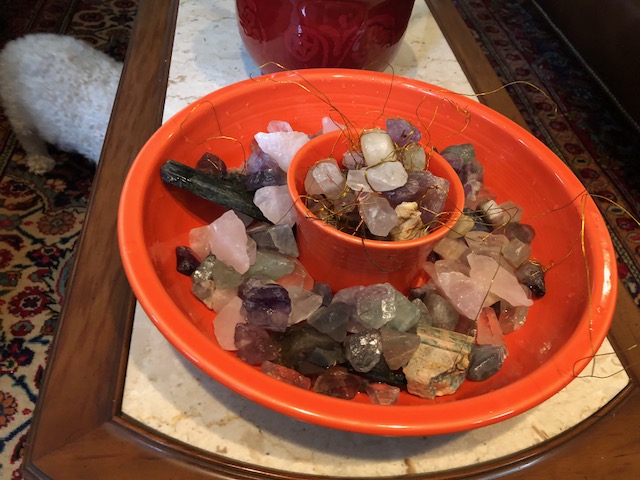 Then in the spring, he harvests the crystals, and then renames the “community tree” to the “tree of life”. He goes on the say that the crystals have become the fruits of the tree of life to be sent out into the world; as they have been set outside through the entire months of the winter and have been cleansed by the moon and the sun.
He then takes the boughs off the tree, and it is at that time that it becomes the beginning of the maypole. It is around the 1st of May that holds a celebration with others in his community
.
He goes on to talk about the “strands” or “ribbons” of the maypole. They have written words of intention on each of the ribbons, words such as love, forgiveness, compassion, kindness, or other intentions. They dance around the maypole as they wrap the pole with all of the ribbons that have been filled with various intentions; this completes the maypole. After the dance they burn the balsam boughs of the tree. The burning of the boughs represents a cleansing of all the things that don’t need to be held onto anymore.
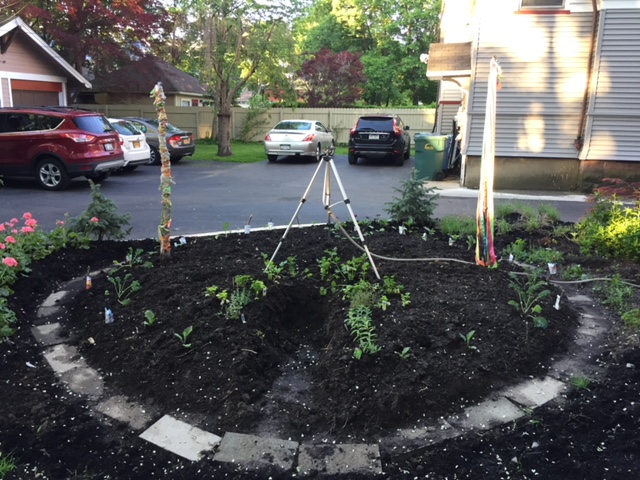
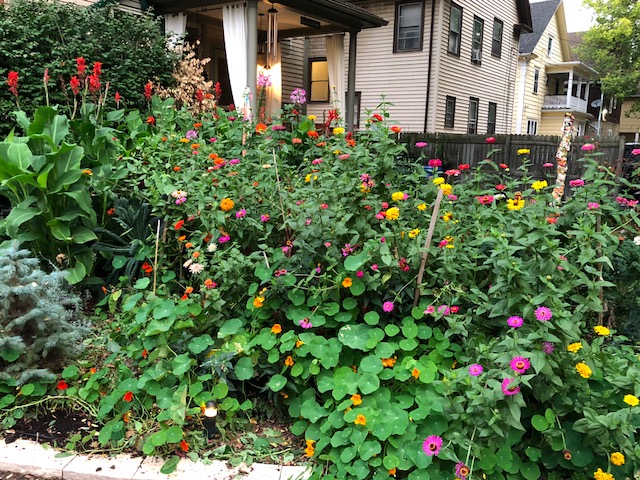
His garden is in a circle. He plants most everything from seed. He lives in the city and said that when he first started his garden he would have some problems with rats and rabbits munching up his plants, as there are no natural predators where he lives. He goes on to say that he asked Nature what he should do about this problem. He said that he was guided to plant kale around the periphery of his garden! He said they will nibble down the kale while the inner plants are establishing, so the kale then acted as a distraction while the seedlings are growing and establishing. In addition, Tom says that the kale, “looks good for a long time, even into the winter when then rabbits will continue to nibble it until it’s gone!”
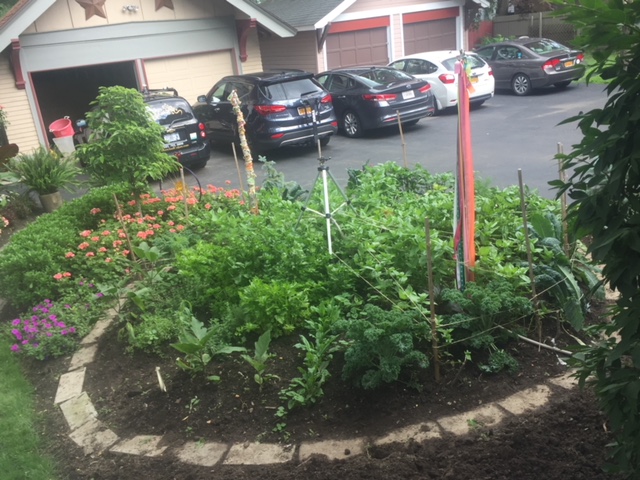
He used to plant a lot of vegetables but now designates most of his garden space to a cut flower garden. He says he cuts them and brings them in, or gives them away.
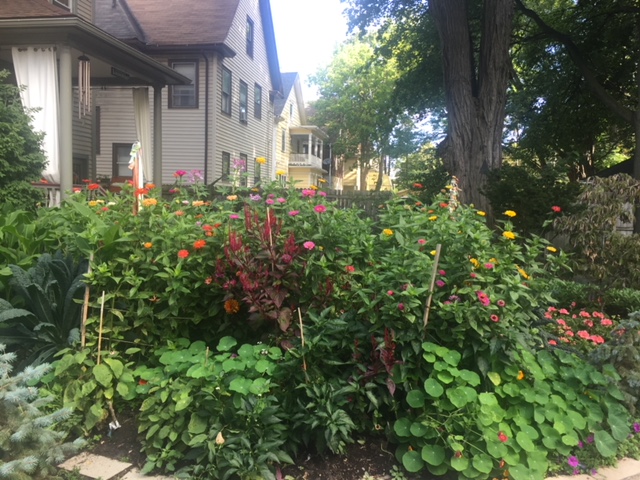
 About half the garden is made up of zinnias in a butterfly shaped pattern, as well as sunflowers, salvia, celosia, Chinese forget me nots, grown mostly from seed. He says, “And then I support the garden, and that sort of parallels in your own life how we all need support. I use twine, and I’m like the spider weaving the web of dimensions. You start putting these supports in when they’re young, and it kind of goes up level upon level as the plants grow.

You know, I get zinnias that grow 7 foot tall! And you know that wouldn’t happen if they weren’t supported because their stems are hollow and would snap, but in a supported environment things can grow much taller.” He says that the supports aren’t really very visible once the plants fill in.
Tom says that once all of the flowers have gone by, he puts leaves from that have fallen from the autumn trees into the garden, and he says, “that’s what grows the garden next year!”. And the cycle will start all over again!
Tom’s heartfelt message is found in these closing words, “It’s just about respecting Nature and choosing to use it to help guide you in your own life. It’s just my own little thing, you know?”

 Josie's Garden Blog